OEM/ODM Commercial Barista & Work Apron Lineup
Direct-from-factory wholesale products engineered for commercial cafes, specialty roasters, luxury hospitality chains, and retail uniform distributors.
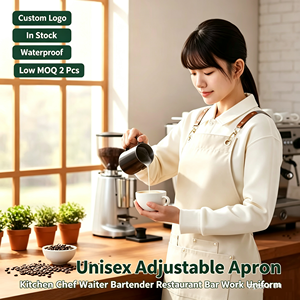
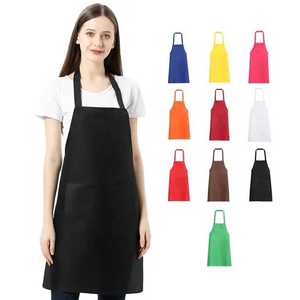
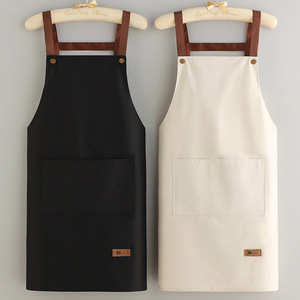
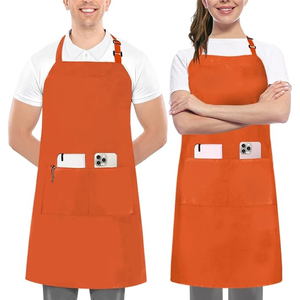
Executive Summary: The Evolution of Commercial Barista Aprons in Global Supply Chains
In the contemporary global hospitality and specialty coffee ecosystem, the barista apron has transitioned from a basic functional protective garment into a critical touchpoint of retail brand identity, ergonomic workforce safety, and operational efficiency. As specialty coffee chains, boutique cafes, artisan bakeries, and high-volume beverage franchises expand globally, demand for high-durability, customizable, and ergonomically engineered aprons has reached an all-time high.
According to recent industry market analyses, the global commercial workwear apparel market is expanding at a CAGR of 6.4%, with hospitality and food service garments occupying over 35% of overall market share. B2B procurement managers and international buyers are no longer seeking generic off-the-shelf textiles; they require customized OEM/ODM manufacturing partners capable of delivering specialized textile treatments, precise Pantone color matching, reinforced hardware construction, and compliant export-ready supply chain logistics.
This industrial whitepaper outlines the technical criteria, fabric chemistry, ergonomic mechanics, and global procurement trends that define premier barista apron manufacturing. Written from the perspective of an established OEM/ODM factory and global exporter, this guide equips commercial buyers, brand managers, and wholesale distributors with actionable insights to optimize their bulk garment sourcing strategies.
Engineering & Manufacturing Excellence
Core technological capabilities integrated into our custom OEM barista apron manufacturing processes.
Stain-Phobic Textile Engineering
Integration of hydrophobic Nano-Teflon™ and oleophobic coatings across heavy-duty canvas and poly-cotton twills, repelling espresso oils, dairy splashes, syrup drips, and water-based liquids without compromising fabric breathability.
Cross-Back Ergonomic Harness
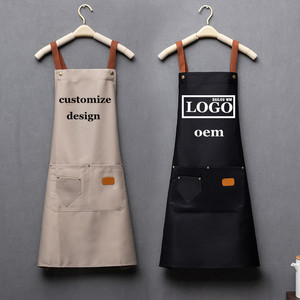
Designed to reduce cervical spine fatigue during 8+ hour barista shifts. Weight distribution systems shift apron tension away from the neck onto the shoulders and upper back using adjustable leather or webbing straps.
Structural Hardware & Riveting
Heavy-gauge antique brass alloy grommets, quick-release swivel snaps, and reinforced solid copper rivets anchored with double-layer backing patches at high-stress pocket corners and strap connection points.
Textile Chemistry & Material Science Matrix
Selecting the optimal textile substrate is fundamental to balancing lifecycle longevity, laundry maintenance costs, and visual aesthetic appeal. Our factory manufactures aprons using four primary fabric architectures, each engineered for distinct hospitality environments:
| Fabric Category | Weight / Composition | Primary Performance Benefits | Target Commercial Usage |
|---|---|---|---|
| Heavy-Duty Duck Canvas | 12 oz – 16 oz (380–480 GSM) 100% Cotton / Waxed Canvas |
Maximum abrasion resistance, rugged vintage patina over time, structural weight distribution. | Artisan specialty coffee roasters, craft cocktail bartenders, craft bakeries. |
| Industrial Poly-Cotton Twill | 240 – 280 GSM 65% Polyester / 35% Cotton |
High colorfastness (Grade 4+), anti-wrinkle, industrial laundry washable up to 75°C, zero shrinkage. | High-volume retail coffee franchises, fast-casual dining chains, hotel staff. |
| Food-Grade PVC & TPU | 0.3mm – 0.5mm Thickness Polyvinyl / Thermoplastic Polyurethane |
100% waterproof, oil-proof, wipe-clean surface, chemical resistant to sanitizer solvents. | High-humidity dishwashing, milk tea preparation, raw ingredient washing, seafood prep. |
| Raw Denim & Selvedge | 10 oz – 14 oz (320–420 GSM) Cotton Denim with Contrast Stitching |
Modern urban fashion branding, customizable distressing, high tensile tear strength. | Trendy urban cafes, microbreweries, gourmet barista competitions. |
Reinforced Stitching & Pattern Construction
Commercial kitchen and cafe environments subject work uniforms to severe mechanical stress. Our OEM manufacturing process employs computerized twin-needle lockstitch machinery, utilizing 3-ply high-tenacity polyester sewing thread. All pocket corners, strap joinery, and towel loops undergo automated computer-controlled bar-tack stitching (28-stitch density per bar tack), preventing seam failure under heavy loads such as handheld POS devices, milk pitchers, and heavy kitchen tools.
Global Procurement Trends: Sourcing Barista Aprons in 2025–2030
As corporate sustainability mandates and digital supply chain tracking become standard requirements for multinational buyers, uniform procurement strategies are undergoing structural shifts. Procurement directors must account for several emerging trends when establishing OEM factory contracts:
- Eco-Vanguard Fabrics & Circular Textiles: Growing demand for OEKO-TEX® Standard 100 and GOTS-certified organic cotton, as well as rPET (recycled polyethylene terephthalate) polyester blended twills. Procurement teams are incorporating carbon-footprint tracking into vendor audits.
- Modular Utility Pockets: Baristas require specialized pockets sized specifically for tablet POS terminals, digital thermometers, cupping spoons, and pens. Detachable magnetic or snap-off pocket modules allow easy washing and customized functional layouts.
- Smart Uniform Integration: Embedding RFID micro-tags into hem seams for automated linen rental management, high-temp commercial laundry sorting, and inventory loss control across multi-unit retail operations.
- Nearshoring vs. High-Capacity Asian OEM Hubs: While nearshoring offers shorter transit lead times, Asian OEM factories maintaining vertical integration—from spinning and weaving to dyeing, printing, and sewing—continue to offer unparalleled cost-efficiencies, scale, and custom hardware development.
Factory OEM/ODM Customization Architecture
Our vertical factory infrastructure allows enterprise clients to build completely customized apron lines from concept rendering to finished goods. We support diverse private-label and corporate identity application techniques:
Precision Embroidery & 3D Puff
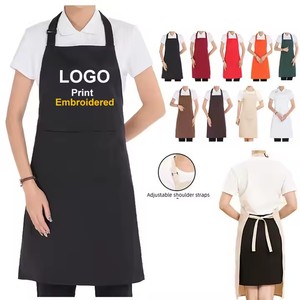
High-density multi-head Tajima embroidery up to 15 colors per design, including metallic threads and raised 3D puff execution for crisp brand logos that withstand continuous washing.
Debossed Leather Patches
Genuine top-grain leather or washable eco-PU patches with heat-debossed, laser-etched, or foil-stamped corporate branding, attached via detachable snap buttons or double-stitched borders.
Silkscreen & Sublimation
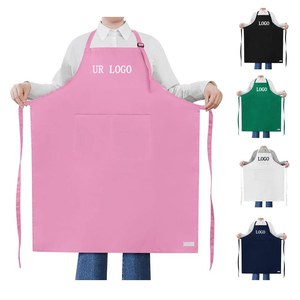
Eco-friendly water-based screen printing, plastisol discharge printing, and full-bleed dye sublimation for vibrant, wash-durable graphics across chest panels and waistlines.
Factory Quality Assurance & Global Export Standards
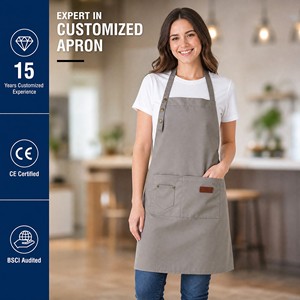
Operating under ISO 9001:2015 certified production workflows, our factory executes a rigorous 5-stage quality management protocol across every production run to eliminate defects before shipment:
- Stage 1: Raw Textile Inspection (Four-Point System): Roll-by-roll inspection for weaving defects, color consistency, GSM variance, and yarn slubs before cutting.
- Stage 2: Computerized Precision Pattern Cutting: Automated CAD laser and knife cutting tables guarantee +/- 1mm dimensional tolerance across all pattern pieces.
- Stage 3: In-Line Assembly Inspection: QC inspectors check seam allowance, stitch density (4-5 stitches per cm), and hardware attachment every 30 minutes.
- Stage 4: Post-Production Functional Stress Testing: Pull-testing rivets and snap fasteners up to 15 kg/f tensile force; hydrostatic head pressure testing for waterproof aprons.
- Stage 5: Final Pre-Shipment Inspection (AQL 1.5 / 2.5): Independent audit of finished garments packaged in individual polybags, master cartons, and palletized shipments according to ISO/DIS 2859-1 standards.
Our fabrics comply with international chemical and safety regulations including REACH (EU), CPSIA (USA), OEKO-TEX® Standard 100, and FDA compliance for direct food contact surface proximity.
Why Global Exporters & Buyers Partner With Our Factory
Choosing an experienced OEM/ODM factory partner provides commercial buyers with direct financial and operational advantages:
- Direct Factory Pricing (Zero Intermediaries): Eliminating trading company markups delivers 15%–30% cost savings on large-volume OEM production runs.
- Flexible MOQ Tiering: Supporting both growing specialty coffee networks (MOQ starting at 200 pcs/color) and high-volume corporate chains (50,000+ pcs per PO).
- Rapid Prototyping & Sampling: In-house sampling department delivers customized physical samples with brand logos within 3 to 5 business days.
- Comprehensive Export Logistics: Experience handling FOB, CIF, DDP, and DAP terms with full documentation including Certificates of Origin, Form E, Bill of Lading, and custom tariff declarations.
Custom Barista Apron Sourcing FAQ
Direct answers to technical, operational, and commercial questions commonly asked by procurement managers and brand buyers.
Q1: What is the minimum order quantity (MOQ) for custom OEM barista aprons?
Our standard MOQ for fully customized aprons (custom dye color, custom size pattern, branded hardware, and logo application) is 200 pieces per design. For in-stock standard color fabrics with custom logo printing or embroidery, we support low MOQs starting at 50 to 100 pieces.
Q2: How do cross-back straps compare to standard neck-loop straps for commercial use?
Cross-back straps distribute the weight of the apron and contents across the shoulders and upper back, preventing cervical neck strain during long barista shifts. Neck loops are simpler and faster to put on but cause fatigue when heavy items are placed in the apron pockets.
Q3: Can your factory produce waterproof and oil-proof barista aprons?
Yes. We offer heavy-duty canvas and poly-cotton fabrics treated with hydrophobic Teflon™ nanotech coatings, as well as 100% waterproof food-grade PVC and TPU aprons designed specifically for dishwashing, syrup blending, and high-moisture prep stations.
Q4: What logo customization methods offer the highest wash durability?
High-density computer embroidery using 100% polyester threads offers the highest wash resistance, enduring commercial high-temperature laundering. For intricate multi-color or gradient logos, debossed washable eco-PU leather patches or high-performance screen prints are recommended.
Q5: How long does a typical bulk production run take from sample approval?
Sample creation takes 3–5 days. Upon sample approval and deposit confirmation, standard bulk manufacturing turnaround is 15–25 calendar days for quantities up to 10,000 units. Expedited production slots are available for urgent corporate chain openings.
Q6: Are the materials used compliant with international safety and food contact standards?
All textiles, dyes, hardware coatings, and synthetic materials used in our factory pass strict REACH (EU), OEKO-TEX® 100, and CPSIA (US) standards, ensuring they are free from harmful azo dyes, heavy metals, phthalates, and formaldehyde.
Q7: Can we request custom hardware colors and branded rivets?
Yes. We provide custom hardware electroplating options including Antique Brass, Gunmetal Black, Rose Gold, Shiny Chrome, and Matte Black. We can also die-cast your brand logo directly onto metal rivets, snaps, and grommets for order volumes exceeding 1,000 units.
Q8: What trade terms and shipping methods do you support for international buyers?
We routinely ship worldwide via Express Courier (DHL/FedEx/UPS) for samples, Air Freight for urgent orders, and Ocean Freight (FCL/LCL) for bulk shipments. We operate under FOB, CFR, CIF, and DDP (Delivered Duty Paid) terms depending on buyer preference.
Ready to Scale Your Barista Uniform & Apron Line?
Partner with a trusted, ISO-certified OEM/ODM factory supplier. Request free fabric swatches, digital mockups, and competitive direct-factory wholesale quotes today.
Contact Us