Industry Insights

Uniform Trends · Garment Manufacturing · Export Guides

0%

Why Choose Professional Hotel Bathrobe Manufacturing?

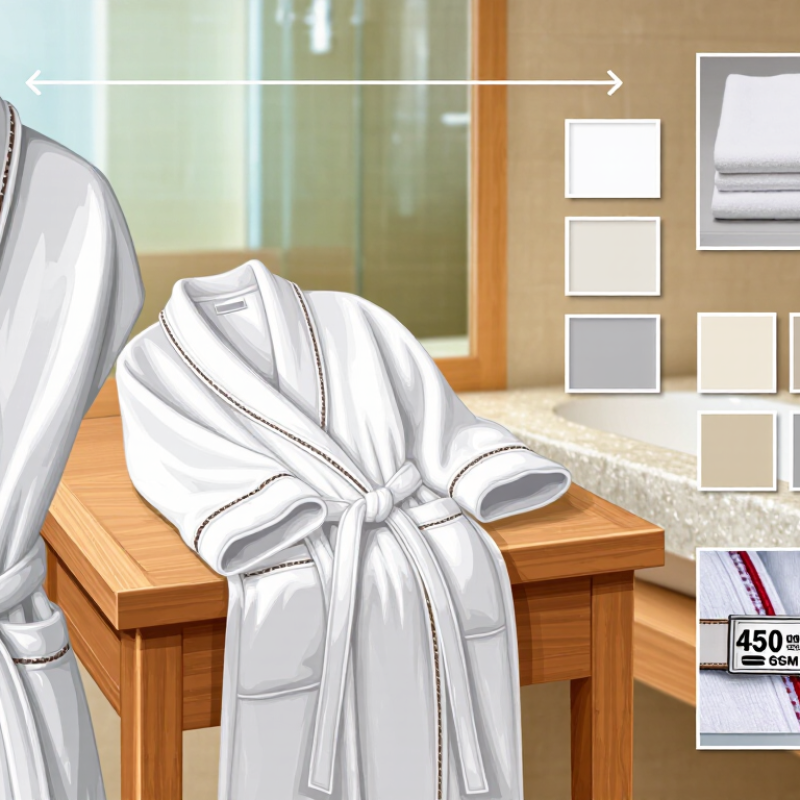
A hotel bathrobe is more than a soft garment beside the shower. It becomes part of the guest’s first physical impression. Professional Hotel Bathrobe Manufacturing turns that impression into a consistent, measurable experience.

In practice, quality starts with fabric selection. Cotton, bamboo blends, and microfiber each create different comfort levels. Fabric weight matters too. A dense 450 GSM robe feels luxurious, while a lighter robe dries faster. Neither choice suits every property. That detail is easy to overlook.

Textile manufacturing expert Debbie McKeegan often emphasizes, “Good manufacturing begins with understanding the product’s entire journey.” This principle fits hotel bathrobes closely. A reliable manufacturer studies washing cycles, shrinkage, colorfastness, stitching strength, and embroidery placement. The robe must survive repeated laundering, not only look attractive in a product photograph.

Small details matter.

Professional suppliers normally provide samples before bulk production. Hotels can inspect sleeve length, collar shape, belt security, and pocket depth. They can also test how the robe feels after several washes. This process reduces unpleasant surprises. It cannot remove every risk.

That is the honest part.

Even experienced manufacturers may face fabric delays, shade differences, or changing guest preferences. Strong communication helps identify these problems early. Clear specifications help even more. Responsible factories also document material sources, production standards, and inspection procedures. These practices support dependable purchasing and protect the hotel’s reputation.

Choosing professional Hotel Bathrobe Manufacturing therefore means choosing control, consistency, and practical expertise. The cheapest option may reduce the initial invoice. It may also create replacement costs later. A well-made robe should feel comfortable, wash reliably, and represent the hotel quietly, every day.
Why Choose Professional Hotel Bathrobe Manufacturing?

Hotel Bathrobe Specifications: 400–600 GSM Terry, Absorbency, and Weight

Professional hotel bathrobe manufacturing begins with a practical understanding of fabric specifications. A 400–600 GSM terry robe offers a balanced feel between comfort and drying efficiency. Lower GSM options feel lighter, but may absorb less water. Higher GSM robes feel plush, though they require more drying time and storage space. A heavier robe is not automatically better. Weight should match room climate, laundry capacity, and guest expectations.

Absorbency depends on more than GSM. Cotton fiber quality, loop height, yarn structure, and finishing treatments also affect performance. In manufacturing, reliable suppliers test water absorption, shrinkage, colorfastness, seam strength, and dimensional stability after repeated washing. We also check sleeve length, belt placement, and collar shape. Small fit problems become obvious when guests move around. Measurement charts can help, but real laundering trials reveal issues that samples sometimes hide.

Tips: Request a washed sample, not only a new one. Compare drying time, softness, and weight after several cycles. Ask for test records and clear GSM tolerances. A 500 GSM robe may sound ideal, yet it could feel too warm in a humid hotel. Consider offering two weights for different seasons or room types. Even experienced buyers can overlook storage space. That mistake becomes expensive.

Fabric Verification: AATCC TM61’s 45-Minute Cycle and Five-Wash Equivalence

Why Choose Professional Hotel Bathrobe Manufacturing?

A professional hotel bathrobe manufacturer treats fabric verification as a measurable process, not a visual promise. AATCC TM61 uses a 45-minute accelerated laundering cycle to estimate the colorfastness effect of five typical home washes. The comparison is useful, but it is not a perfect prediction. Water hardness, detergent, temperature, and drying methods can change actual results.

In practical testing, technicians record the fabric shade before washing. They inspect the collar, cuffs, belt loops, and side seams after each cycle. Shrinkage, pilling, color transfer, and absorbency receive equal attention. A robe may keep its color yet lose softness. That matters to guests. It also affects replacement costs and service consistency.

Professional production connects laboratory findings with real hotel use. Test samples should match the final fabric weight, dye lot, stitching, and finishing process. Otherwise, the report may look reliable while representing a different robe. This is where experience matters. I have seen small changes in finishing alter hand feel after repeated washing. The result was acceptable on paper, but disappointing in use. More testing was needed.

The five-wash equivalence should guide decisions, not end them. A responsible supplier reviews test limits, documents conditions, and explains uncertainty clearly. That approach supports better purchasing judgments, especially for robes exposed to frequent industrial laundering.

Quality Control: ASTM D4966 Abrasion Testing and Seam-Strength Inspection

Why Choose Professional Hotel Bathrobe Manufacturing?

Professional bathrobe manufacturing depends on measurable fabric performance, not attractive samples alone. In daily hotel use, robes face repeated washing, rubbing, pulling, and hurried handling. ASTM D4966 abrasion testing helps evaluate how textile surfaces respond to controlled wear.

A laboratory technician mounts fabric specimens in a Martindale abrasion tester. The machine applies repeated rubbing under a defined pressure. Technicians record visible damage, including thinning, pilling, broken yarns, or holes. Testing conditions must remain consistent, or comparisons become unreliable. Small details matter.

Seam-strength inspection examines the robe’s most vulnerable points. Inspectors test shoulder seams, sleeve joins, belt loops, and pocket attachments. They use tensile equipment to apply controlled force until the seam opens or the fabric fails. Stitch density, seam allowance, thread quality, and fabric construction all influence the result. A strong seam can still fail when stitching is uneven.

Practical experience improves this process. Inspectors should sample different production batches, not only the first approved pieces. They should also review robes after laundering, because moisture and heat can expose hidden weaknesses. No test is perfect. ASTM abrasion results may not reproduce every hotel environment. Seam testing may overlook damage caused by snagging. That limitation deserves attention, not dismissal. Reliable manufacturers combine laboratory data, production records, and careful visual checks before shipment. The goal is consistent comfort with fewer surprises in service.

Why Choose Professional Hotel Bathrobe Manufacturing?

Quality Control: ASTM D4966 Abrasion Testing and Seam-Strength Inspection

Professional manufacturing combines ASTM D4966 abrasion testing with seam-strength inspection to evaluate fabric durability and construction reliability. The chart presents an anonymized example dataset across five inspection checkpoints. Abrasion resistance is shown in Martindale cycles, while seam strength is measured in newtons (N); acceptance limits should be defined according to the fabric type, construction, and buyer specification.

Guest Safety: OEKO-TEX STANDARD 100 Screening for Harmful Substances

Professional hotel bathrobe manufacturing should treat guest safety as a measurable process. A robe touches the neck, wrists, and torso for extended periods. Residues from dyes, finishes, or detergents may irritate sensitive skin. OEKO-TEX STANDARD 100 screening evaluates textiles against more than 1,000 harmful substances. Its limit values are updated regularly, with stricter requirements for products touching skin directly.

Independent testing matters because appearance proves very little. The European Chemicals Agency’s 2023 enforcement project inspected 2,407 products and found 18% non-compliant with relevant chemical rules. The result is a warning for hotel procurement teams. A soft robe is not automatically a safe robe. Professional manufacturers should keep test reports, verify certificate validity, and control each production lot. They should also examine dyes, sewing threads, elastic components, and finishing agents.

Laundry conditions deserve attention, too. Heat, moisture, and repeated washing can change textile performance. A responsible factory can test colorfastness, shrinkage, and residual chemicals after laundering. This reflects real hotel use, not only laboratory conditions. Still, certification is not a magic shield. Supplier audits can miss process changes, and documentation may become outdated. Hotels should review certificates periodically and request current evidence before accepting every shipment.

Why Choose Professional Hotel Bathrobe Manufacturing? - Guest Safety: OEKO-TEX STANDARD 100 Screening for Harmful Substances

Assessment Dimension What Is Screened or Verified Relevance to Hotel Bathrobes Professional Manufacturing Benefit
Product safety standard OEKO-TEX STANDARD 100 is a textile safety certification system that evaluates textile articles for harmful substances. Bathrobes are worn directly on the skin, often after bathing when skin may be more sensitive. Provides a structured, independent safety assessment rather than relying only on visual inspection or material declarations.
Coverage of product components The assessment can cover all components of the finished article, including outer fabric, sewing thread, labels, cords, embroidery, prints, buttons, zippers and other accessories. Potential chemical exposure may come from trims and finishing materials, not only from the main fabric. Encourages complete bill-of-materials control and reduces the risk of overlooking small but skin-contact components.
Formaldehyde Formaldehyde is among the substances restricted under the standard, with requirements depending on the applicable product class. Helps address concerns associated with chemical finishes and direct skin contact. Supports controlled finishing processes and documented chemical management.
Azo colorants and prohibited dyes The standard restricts certain azo colorants that can release regulated aromatic amines, along with other prohibited colorants. Relevant to dyed terry fabric, piping, embroidery and printed decorative elements. Promotes traceable dye selection and more consistent color-production controls.
Extractable heavy metals The requirements include limits for specified extractable heavy metals, with limits varying according to product class and substance. Important for colored materials, prints, metallic trims and accessories that may contact skin. Helps manufacturers select compliant dyes, pigments, trims and supplier inputs.
Pesticide residues and phenols The testing requirements include specified pesticides and phenolic compounds where applicable to the textile product. Provides additional chemical screening for fibers and textile processing inputs. Strengthens raw-material qualification and supplier documentation procedures.
Perfluorinated compounds and other regulated chemicals The standard is regularly updated and includes requirements for additional regulated substances, which may include certain PFAS-related compounds and other chemicals depending on the current edition. Relevant when water-repellent, stain-resistant or specialty finishes are used. Encourages the use of documented, current and compliant finishing chemistry.
Product classes by skin contact The standard uses four product classes: Class I for babies, Class II for products with direct skin contact, Class III for products with no or little skin contact, and Class IV for decorative materials. Hotel bathrobes generally fall into the direct-skin-contact category because they are worn against the body. Helps the manufacturer select the appropriate safety requirements for the intended use.
Testing and certification process Certification is carried out through authorized independent testing institutes using laboratory testing and, where applicable, conformity assessment procedures. Offers a documented verification route for textiles supplied to hospitality operations. Improves purchasing confidence, supplier accountability and product documentation.
Ongoing standard updates OEKO-TEX requirements are reviewed and updated periodically to reflect regulatory and scientific developments. Hotel textile programs may require repeated purchasing over time, so current compliance matters. Professional manufacturers can maintain controlled specifications and review compliance when standards change.
Responsible claim management A certification applies to the certified article and its stated components under the applicable certification conditions; it does not automatically certify every product made by a manufacturer. Prevents inaccurate claims about bathrobe safety and helps purchasing teams verify the specific product documentation. Supports transparent communication, batch control and more reliable hotel procurement decisions.

Note: Specific limit values, test methods and applicable substances depend on the current OEKO-TEX STANDARD 100 requirements and the product’s assigned class.

Commercial Efficiency: MOQ Planning, Reorder Consistency, and Cost per Use

Why Choose Professional Hotel Bathrobe Manufacturing?

Commercial bathrobe purchasing starts with demand, not fabric preference. AHLA’s 2024 industry forecast placed U.S. hotel occupancy at 63.6%, showing why seasonal planning matters. A professional manufacturer can translate room counts, occupancy patterns, and laundry cycles into a practical MOQ. For example, a 200-room property may need 700 robes, not 200, after accounting for guest use, laundry rotation, damage, and emergency stock. That calculation is easy to underestimate.

Reorder consistency protects both operations and guest experience. Matching weight, size grading, color, and belt construction reduces sorting time in the linen room. It also prevents replacement batches from feeling noticeably different. I would specify a tolerance sheet and approve a pre-production sample. Still, specifications are not enough. Dye lots can vary, and delivery delays can expose weak planning. A small safety stock may cost more initially, but missing robes during peak occupancy costs more per occupied room.

Cost per use reveals the commercial value more clearly than unit price. A $18 robe used 120 times has a purchase cost of $0.15 per use, excluding laundry and replacement labor. The UNEP 2023 textile value-chain report estimates textiles generate 2–8% of global greenhouse-gas emissions, making durability a purchasing concern, not merely an environmental preference. In practice, stronger seams and stable shrinkage may extend service life. My own calculation can still be imperfect. Laundry temperature, detergent, and folding damage deserve measurement before finalizing the MOQ.

FAQS

Why should hotel bathrobes undergo abrasion testing?

Hotel robes face repeated rubbing, washing, pulling, and hurried handling. Abrasion testing reveals thinning, pilling, broken yarns, or holes. Attractive samples can mislead.

How is fabric abrasion tested?

A technician mounts fabric in a rubbing machine under controlled pressure. Repeated cycles imitate surface wear. Conditions must remain consistent for useful comparisons.

Which robe areas need seam-strength inspection?

Inspectors check shoulder seams, sleeve joins, belt loops, and pocket attachments. These areas receive frequent pulling. Small stitching defects can become visible failures.

What affects seam strength?

Stitch density, seam allowance, thread quality, and fabric construction all matter. Uneven stitching can weaken an otherwise strong seam. It happens.

Should testing include robes from different production batches?

Yes. Inspecting only the first approved pieces may hide later variation. Samples should come from several batches and include visual checks.

Why should robes be inspected after laundering?

Heat, moisture, and repeated washing can expose hidden weaknesses. Inspectors can check shrinkage, colorfastness, seam opening, and surface damage. Real laundry is less gentle.

How can manufacturers support guest safety?

They should screen fabrics, dyes, threads, elastic parts, and finishing agents for restricted substances. Current test reports should accompany production records. Softness alone proves little.

Are laboratory tests and certificates completely reliable?

No. Laboratory rubbing may not reproduce every hotel environment, and seam tests may miss snagging damage. Certificates can become outdated. Regular reviews remain necessary.

Conclusion

Professional Hotel Bathrobe Manufacturing focuses on producing robes that combine guest comfort, reliable performance, and long-term commercial value. A typical specification includes 400–600 GSM terry fabric, selected for its softness, absorbency, warmth, and manageable weight. Fabric performance can be evaluated through AATCC TM61, using a 45-minute accelerated laundering cycle that helps estimate the impact of repeated washing. This provides useful guidance for durability and color retention over approximately five standard wash cycles.

Consistent quality also depends on ASTM D4966 abrasion testing, detailed seam-strength inspections, and careful checks of fabric construction. Guest safety should be supported by OEKO-TEX STANDARD 100 screening for harmful substances, helping ensure materials are suitable for direct skin contact. From a purchasing perspective, effective MOQ planning, stable reorder specifications, and accurate cost-per-use calculations allow hotels to control expenses while maintaining a consistent guest experience. A professional manufacturing process therefore supports comfort, safety, durability, and efficient inventory management.

Rosalie

Rosalie

Rosalie is a dedicated marketing professional with a strong understanding of the company’s products, customers, and industry landscape. Through thoughtful research and practical experience, she transforms complex product information into clear, useful, and engaging content for both professional and......