Industry Insights

Uniform Trends · Garment Manufacturing · Export Guides

0%

Choosing the right partner for Corporate Sweatshirt Manufacturing requires more than comparing prices. Buyers must examine fabric quality, production capacity, communication, and ethical business practices. This guide introduces leading suppliers serving international brands, retailers, schools, and corporate teams.

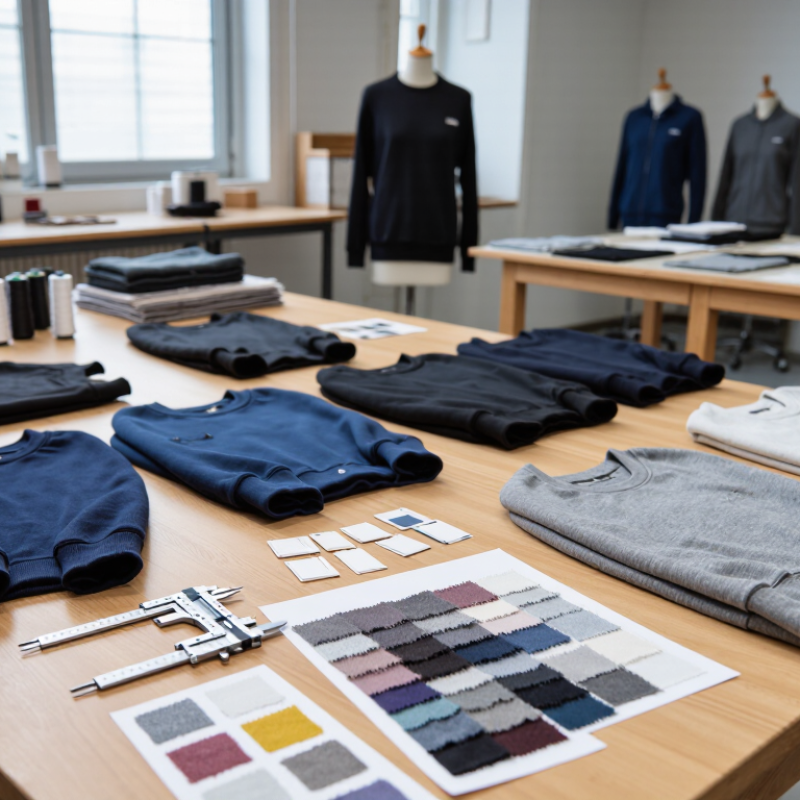
Experienced manufacturers usually provide clear technical sheets, size grading, color cards, and pre-production samples. A 320gsm cotton blend may feel substantial, while brushed fleece offers warmth without excessive weight. Ribbed cuffs should recover after stretching. Embroidery must remain clean around small logos. These details affect comfort, durability, and brand presentation.

Supplier evaluation should also include factory audits, quality-control procedures, minimum order quantities, and realistic delivery schedules. Reliable companies explain where materials come from and how defects are handled. Certifications can support trust, but they should be verified rather than accepted at face value. Small details matter. Samples disagree.

This overview compares suppliers using practical manufacturing factors, not promotional claims alone. It considers customization options, communication standards, shipment experience, and documented production capabilities. However, rankings are not permanent. Markets change, factories expand, and service quality can vary between orders. That uncertainty deserves attention.

A strong supplier may still make occasional mistakes. The important question is how quickly and transparently those problems are corrected. Buyers should request recent samples, confirm written specifications, and test garments before placing large orders. This approach helps reduce surprises and supports more dependable sourcing decisions worldwide.

Top Corporate Sweatshirt Manufacturing Suppliers Worldwide

Definition and Role of Corporate Sweatshirt Manufacturers

Corporate sweatshirt manufacturers are specialized suppliers that design, produce, and prepare sweatshirts for businesses, institutions, and professional teams. Their role goes beyond sewing fabric together. They translate a company’s visual identity into practical clothing through colors, sizing, decoration, and material selection.

Experienced manufacturers usually manage sampling, fabric sourcing, production planning, quality inspections, and shipment preparation. A reliable supplier can recommend cotton blends, brushed fleece, or recycled fibers for different climates and budgets. They also check measurements carefully. A two-centimeter sizing error can create discomfort across an entire order.

In practice, the process is rarely perfect. A sample may look attractive but feel too heavy after several hours of wear. Good manufacturers welcome testing and adjust the pattern before mass production. Their expertise becomes visible in stitching strength, print durability, color consistency, and communication during delays. These details support trust, especially when orders serve employees across several locations.

Tips: Request a physical sample before approval. Test the sweatshirt after washing. Confirm size charts, fabric weight, decoration methods, and delivery timelines in writing. Ask how defects are recorded and corrected. Clear records matter. Supplier claims should be checked against samples, inspection reports, and past production evidence.

Top Corporate Sweatshirt Manufacturing Suppliers Worldwide

Corporate sweatshirt manufacturers turn brand requirements into scalable products by selecting suitable fabrics, managing decoration methods, controlling quality, and coordinating production. Fabric weight is one of the key specifications used to balance comfort, durability, and cost.

How to read the chart: French terry is commonly selected for lightweight corporate apparel, while fleece constructions provide greater warmth and structure. The ranges shown represent widely used commercial sweatshirt fabric weights, measured in grams per square metre (GSM).

Key Criteria for Comparing Global Manufacturing Suppliers

Top Corporate Sweatshirt Manufacturing Suppliers Worldwide: Key Criteria for Comparing Global Manufacturing Suppliers

A competitive supplier should offer more than a low sweatshirt price. Compare fabric weight, fiber composition, shrinkage, pilling, colorfastness, and seam strength. Request a physical sample. Then wash it at least five times. Small flaws become obvious.

Sustainability data also needs careful checking. Textile Exchange’s Materials Market Report 2024 estimates global fiber production reached 124 million tonnes in 2023. It could reach 160 million tonnes by 2030. Ask suppliers for recycled-content certificates, wastewater records, and material traceability. Vague claims are not evidence.

Factory audits should verify worker safety, working hours, wage systems, and subcontracting controls. A polished audit file can still miss seasonal production pressure.

Operational reliability matters equally.

The World Bank’s Logistics Performance Index 2023 evaluates customs, infrastructure, tracking, and delivery timeliness. Use these categories when comparing production countries. Request documented lead times for sampling, bulk production, and replenishment. Check minimum order quantities, packaging details, inspection procedures, and communication response times.

My comparison sheets often reveal an uncomfortable issue: the cheapest quotation becomes expensive after rework, delayed launches, or excess inventory. Price remains important, but it should sit beside defect rates, on-time delivery, payment terms, and corrective-action records. Suppliers should explain one failed order openly. That answer can be more useful than a perfect presentation.

Major Production Regions and Their Industry Strengths

Corporate sweatshirt manufacturing is concentrated in several regions, each with distinct production strengths. China offers broad material access, flexible order quantities, and mature development teams. Its factories can handle fleece, French terry, embroidery, and complex size ranges. Bangladesh is strong in large-volume knitwear production and competitive labor efficiency. It suits standardized programs with stable designs. Vietnam combines careful sewing with improving fabric development, making it useful for mid-to-large corporate orders.

Turkey benefits from short lead times to European markets and strong cotton-based textile expertise. Its suppliers often respond quickly to seasonal changes. Portugal is known for refined finishing, smaller production runs, and premium garment construction. However, regional strengths can be overstated. A capable factory still depends on fabric consistency, worker training, and transparent quality controls. Production conditions vary between facilities, not just countries.

Tips: Request fabric weight, shrinkage results, and colorfastness reports before approval. Check a pre-production sample under real washing conditions. Ask how defects are recorded and corrected. For international orders, confirm lead times, packaging details, and inspection responsibilities in writing. A lower unit price may hide higher testing, freight, or rework costs. Leave room for delays; even experienced suppliers can misjudge peak-season capacity.

Customization, Materials, Quality Control, and Compliance

Top Corporate Sweatshirt Manufacturing Suppliers Worldwide

Corporate sweatshirt sourcing depends on more than attractive samples and competitive pricing. Customization should match the company’s purpose, climate, and daily use. Suppliers need clear artwork files, approved measurements, embroidery placement, label details, and packaging instructions. A physical sample can reveal uneven stitching, distorted logos, or uncomfortable seams. Small details matter. Color references should be checked under different lighting, not only on a computer screen. In practice, rushed approvals often create avoidable rework and delayed deliveries.

Material selection affects comfort, durability, and cost. Cotton-rich fleece feels soft, while recycled fibers can support sustainability goals when traceability is documented. The supplier should report fabric weight, fiber composition, shrinkage, pilling resistance, and colorfastness. A 320 GSM sweatshirt may suit cool offices, but it can feel excessive in warmer regions. Fit testing across several sizes is essential. One sample is not enough.

Quality control should cover fabric inspection, panel cutting, sewing, printing, washing, and final packing. Inspection records should include measurements and acceptable defect limits. Reliable factories also maintain batch records and retain production samples. Compliance requires documented chemical controls, safe working conditions, responsible labor practices, and testing against destination-market requirements. Certificates deserve verification. Paperwork alone cannot prove factory performance. An independent audit may expose gaps that internal reports miss, which is uncomfortable but useful. Suppliers should explain corrective actions clearly and provide evidence before shipment.

Sourcing Process, Pricing Factors, and Supplier Selection

Top Corporate Sweatshirt Manufacturing Suppliers Worldwide

A reliable sourcing process starts with a clear technical pack. Include fabric composition, weight, color references, measurements, stitching details, and artwork placement. Samples reveal problems. Check sleeve length, rib recovery, shrinkage, and print durability before discussing bulk production. Request a pre-production sample after corrections. Keep records. This prevents verbal promises from replacing measurable requirements.

Pricing depends on more than the garment itself. Fabric type, GSM, dyeing method, trims, labor, packaging, order quantity, and shipping can change the final cost. Ask for a line-by-line quotation, including sample fees and tooling charges. A low unit price may hide expensive setup costs or weak quality control. Compare landed cost, not just factory cost. Currency changes and seasonal freight rates also deserve attention.

Supplier selection should combine evidence with communication. Review factory capacity, monthly output, lead-time history, inspection procedures, and material traceability. Request recent test reports and independent audit documents where appropriate. Confirm the minimum order quantity and acceptable defect rate in writing. I have seen promising suppliers miss deadlines because approval stages were unclear. A weekly production schedule, photo records, and one accountable contact can reduce that risk. Still, no checklist replaces a small trial order. Mistakes often appear only when several sizes, colors, and cartons move together.

Top Corporate Sweatshirt Manufacturing Suppliers Worldwide - Sourcing Process, Pricing Factors, and Supplier Selection

Comparative reference table for evaluating anonymous sweatshirt manufacturing supplier profiles. Pricing is indicative FOB or comparable export pricing in USD and varies according to fabric weight, order volume, decoration, packaging, testing, and delivery terms.

Supplier Profile and Region Typical Product Strength Common Fabric Options Commercial Benchmarks Sourcing and Production Process Selection Considerations
Indicative FOB Price per Piece Typical MOQ Production Lead Time Sampling and Approval Quality-Control Practices Export and Compliance Readiness Best Fit for Corporate Buyers Main Cost Drivers Overall Evaluation
East Asia
Large-Scale Knitwear Manufacturer
High-volume basic crewneck and hooded sweatshirts with consistent sizing and repeat-order capacity. Cotton fleece Cotton-polyester blend French terry Recycled polyester $5.20–$10.80 500–1,500 pieces per style and color 45–70 days after approval and deposit Lab-dip or fabric approval, size-set sample, pre-production sample, and approved measurement chart. Inline inspections, measurement checks, fabric-weight testing, needle detection, and final random inspection. Usually experienced with commercial export documentation, carton specifications, and third-party testing. Large corporate campaigns, annual uniform programs, and multi-color orders. Fabric GSM, color count, embroidery area, custom labels, packaging, testing, and order quantity. ★★★★☆ Strong for scale
South Asia
Vertically Integrated Cotton Supplier
Cost-effective cotton sweatshirts with strong control over spinning, knitting, dyeing, and cut-and-sew operations. Combed cotton Organic cotton Cotton fleece Loopback terry $4.60–$9.40 300–1,000 pieces per style and color 50–75 days after final approval Color standard approval, fabric hand-feel confirmation, fit sample, and pre-production approval. Fabric inspection, shade segregation, sewing-line audits, AQL-based final inspection, and carton checks. Often able to support social-compliance audits, fiber certificates, and export packing requirements. Price-sensitive programs requiring cotton content, sustainability documentation, or flexible product development. Yarn composition, organic or recycled certification, dyeing complexity, trims, freight, and payment terms. ★★★★☆ Strong value
Southeast Asia
Flexible Cut-and-Sew Factory
Mid-volume corporate apparel, custom silhouettes, and mixed-size orders with relatively flexible development support. Cotton-poly fleece French terry Brushed fleece Performance blends $5.00–$10.50 250–800 pieces per style and color 40–65 days after approval Tech-pack review, prototype sample, fit comments, size-set sample, and pre-production confirmation. Critical-measurement checks, seam-strength checks, print placement review, and final shipment inspection. Commonly supports export labeling, packing lists, commercial invoices, and buyer-specific compliance procedures. Medium-sized companies, event merchandise, and programs requiring several designs in moderate quantities. Lower volume efficiency, design complexity, special trims, print coverage, and air-freight deadlines. ★★★★☆ Strong flexibility
Eastern Europe
Nearshore Premium Manufacturer
Premium corporate sweatshirts with faster regional replenishment and close communication for European buyers. Organic cotton Heavyweight fleece French terry Recycled blends $8.50–$17.50 150–500 pieces per style and color 25–50 days after approval Digital development, physical prototype, fit approval, color approval, and production confirmation. Frequent in-line supervision, detailed measurement reports, fabric traceability, and final inspection. Usually suitable for regional customs, labeling, traceability, and buyer-specific European documentation. Premium staff apparel, smaller orders, rapid replenishment, and projects requiring frequent communication. Higher labor cost, premium fabric, lower production volume, embellishment, and expedited delivery. ★★★★☆ Strong for proximity
Mediterranean Region
Short-Run Fashion-Oriented Factory
Small-batch sweatshirts, fashion-led details, garment dyeing, and higher-touch finishing. Garment-dyed cotton Loopback terry Heavy fleece Cotton-modal blends $9.00–$19.00 100–400 pieces per style and color 30–55 days after approval Prototype review, wash test, color approval, fit approval, and final pre-production sample. Wash-shrinkage testing, colorfastness checks, seam inspection, and detailed finishing review. Generally capable of supporting regional labeling, fiber-content declarations, and restricted-substance testing. Premium internal merchandise, limited-edition corporate collections, and highly customized programs. Garment dyeing, washes, low volume, custom finishing, premium trims, and complex artwork. ★★★★☆ Strong for premium detail
North America
Domestic or Near-Market Decorator
Rapid-turn corporate merchandise, local decoration, replenishment, and smaller ready-stock programs. Cotton fleece Poly-cotton fleece Performance fleece $12.00–$27.00 50–250 pieces per style and color 10–35 business days, depending on blank-garment availability Artwork proof, decoration strike-off, size confirmation, and production approval. Decoration placement checks, color matching, garment inspection, count verification, and packing review. Convenient for local invoicing, domestic delivery, labeling, and buyer-specific packaging requirements. Urgent events, small corporate teams, local campaigns, and frequent low-volume replenishment. Domestic labor, blank-garment sourcing, decoration method, rush service, shipping distance, and packaging. ★★★★☆ Strong for speed
Latin America
Regional Replenishment Manufacturer
Regional corporate apparel with shorter delivery routes to nearby markets and competitive labor economics. Cotton jersey fleece Cotton-poly blends French terry Recycled polyester $6.50–$14.00 200–700 pieces per style and color 35–60 days after approval Tech-pack review, prototype, color approval, fit sample, and pre-production meeting. Fabric and shade checks, sewing inspections, print or embroidery checks, and final random inspection. Often supports regional customs documentation, bilingual communication, and buyer-specific carton marking. Regional distribution, near-market supply, corporate events, and recurring employee apparel. Fabric sourcing, import duties, decoration, local transport, order size, and currency fluctuations. ★★★☆☆ Strong regionally
Middle East and North Africa
Integrated Export Apparel Facility
Medium-to-large orders, competitive labor costs, and production suited to regional corporate and promotional programs. Cotton fleece Cotton-poly fleece French terry Recycled blends $5.80–$12.50 300–1,000 pieces per style and color 45–70 days after approval Fabric approval, prototype, fit and size-set approval, artwork confirmation, and pre-production sample. Fabric inspection, in-line sewing audits, measurement checks, decoration checks, and final inspection. Export readiness varies; buyers should verify testing capability, social audits, labeling, and documentation before contracting. Regional corporate uniforms, promotional programs, and buyers seeking diversified sourcing. Fabric availability, order volume, shipping route, customs, trims, decoration, and compliance testing. ★★★☆☆ Verify capabilities

Recommended supplier-selection sequence: confirm product specifications and target price, request factory and compliance documentation, review samples, validate fabric composition and shrinkage, approve a pre-production sample, conduct independent quality inspection, and finalize shipping and payment terms. Prices exclude taxes, duties, freight, artwork development, and exceptional testing unless stated otherwise.

FAQS

What information should a technical pack include?

Include fabric composition, GSM, color references, measurements, stitching details, and artwork placement. Add label and packaging instructions. Clear specifications reduce avoidable rework.

Why is a physical sample important?

A sample can reveal uneven stitching, distorted logos, or uncomfortable seams. Check sleeve length, rib recovery, shrinkage, and print durability. Samples reveal problems.

How should sweatshirt materials be selected?

Cotton-rich fleece feels soft and suits cooler environments. Recycled fibers may support sustainability goals when traceability is documented. Review GSM, fiber content, pilling resistance, shrinkage, and colorfastness. A 320 GSM sweatshirt may feel heavy in warm regions.

How many sizes should be tested?

Test several sizes before bulk production. One sample is insufficient. Compare chest width, sleeve length, body length, and comfort across the size range.

What should quality control cover?

Inspect fabric, panel cutting, sewing, printing, washing, and final packing. Record measurements and acceptable defect limits. Keep batch records and production samples. Small errors can multiply inside large cartons.

How can compliance be checked responsibly?

Request documented chemical controls, safe working conditions, labor practices, and destination-market testing. Verify certificates instead of accepting paperwork automatically. Paperwork is not proof. Independent audits can reveal uncomfortable but useful gaps.

What factors affect the final sweatshirt cost?

Fabric, GSM, dyeing, trims, labor, packaging, order quantity, and shipping all affect pricing. Request a line-by-line quotation. Include sample fees and tooling charges. Compare landed cost, not only factory cost.

How should a supplier be evaluated?

Review production capacity, monthly output, lead-time history, inspection methods, and material traceability. Confirm minimum order quantities and defect limits in writing. A weekly schedule, photo records, and one accountable contact can reduce confusion.

Why is a small trial order useful?

A trial order tests several sizes, colors, and cartons together. It can expose packing mistakes and inconsistent measurements. I may overlook something. Reviewing the results before scaling is still wiser.

Conclusion

Corporate Sweatshirt Manufacturing plays an important role in producing comfortable, durable, and professional apparel for organizations, teams, events, and promotional programs. This article explains how corporate sweatshirt manufacturers support businesses through scalable production, consistent quality, and flexible customization. It also examines key criteria for comparing global suppliers, including production capacity, communication, lead times, technical expertise, and reliability. Major manufacturing regions are reviewed according to their strengths in textiles, labor skills, innovation, infrastructure, and export capabilities.

The discussion also covers fabric selection, garment construction, printing and embroidery options, color consistency, sizing, quality inspections, and responsible compliance practices. Readers will learn how to evaluate sourcing procedures, understand pricing factors such as materials, order volume, customization, shipping, and testing, and select a supplier that matches their budget and performance expectations. By considering these elements together, buyers can build a more efficient, transparent, and dependable sweatshirt supply strategy.

Evelyn

Evelyn

Evelyn is a dedicated marketing professional with a deep understanding of the company’s products, customers, and market landscape. With a strong combination of strategic insight, practical experience, and a passion for clear communication, she regularly contributes expert articles to the company’s......