Industry Insights
Uniform Trends · Garment Manufacturing · Export Guides
7 Tips for Custom Food Service Apron Manufacturing?
Table of Contents
- Defining Requirements for Custom Food Service Apron Manufacturing
- Selecting Suitable Fabrics, Features, and Protective Treatments
- Creating an Accurate Apron Design and Size Specification
- Managing Sampling, Quality Control, and Production Standards
- Evaluating Suppliers, Costs, Delivery, and Long-Term Support
- FAQS
- Conclusion
- Related Posts
A food service apron protects more than clothing. It supports hygiene, comfort, brand visibility, and daily staff performance. In a busy kitchen, a weak strap can fail during a lunch rush. A rough seam can irritate the neck after eight hours. Small details matter.
This guide explores seven practical tips for Custom F&B Apron Manufacturing. It draws on common production experience, supplier discussions, and quality checks used in professional apparel sourcing. We will examine fabric weight, color accuracy, pocket placement, fastening systems, embroidery, size grading, and final inspection. Each decision should match the working environment. A bakery may need lightweight, stain-resistant aprons. A grill station may require stronger fabric and improved heat awareness. Retail presentation also matters, especially when staff interact directly with customers.
Good manufacturing begins with clear specifications. It continues through sampling, testing, and honest communication. Ask for fabric composition, shrinkage information, stitching details, and care instructions. Request a physical sample before approving bulk production. Never rely on photographs alone.
No checklist is flawless.
Some recommendations may need adjustment. Budget, climate, washing methods, and local workplace expectations can change the best solution. A visually attractive apron may still feel uncomfortable. A durable fabric may become too warm. These trade-offs deserve careful review, not rushed approval. By combining practical experience with documented quality control, buyers can reduce avoidable mistakes and develop aprons that look professional, perform reliably, and represent the food service brand with confidence.
Defining Requirements for Custom Food Service Apron Manufacturing
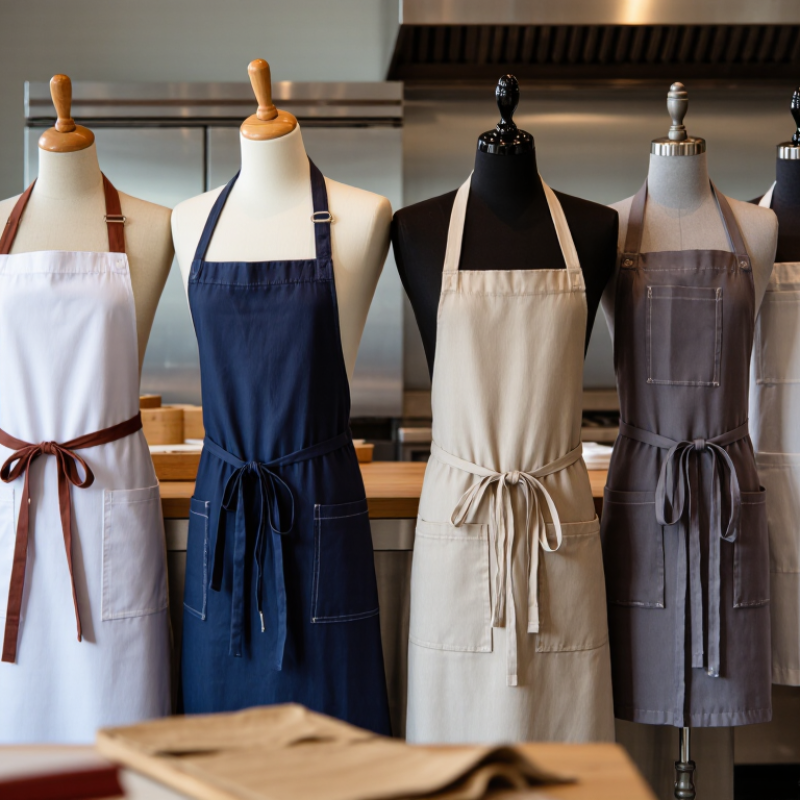
Defining requirements is the most important stage in custom food service apron manufacturing. Before requesting a quotation, identify who will wear the aprons and where they will work. A bakery, open kitchen, and outdoor catering team need different protection. Measure the preferred apron length, chest coverage, strap position, and pocket size. Record the wearer’s height range, not only one sample employee. Small details matter.
Choose fabric according to heat, stains, washing frequency, and movement. A breathable cotton blend may suit front-of-house staff, while a stronger, stain-resistant fabric may support busy kitchen work. Specify color tolerance, stitching quality, hardware material, and logo placement. Ask about shrinkage after repeated washing. Also define the required washing temperature and drying method. These details affect durability and comfort.
From practical production experience, a clear measurement chart prevents expensive revisions. Request a pre-production sample and test it during a real shift. Check whether the neck strap pulls, pockets sag, or the hem catches on equipment. The first sample may look correct but still feel wrong. Reconsider it. Confirm packaging, inspection standards, order quantity, delivery dates, and replacement procedures in writing. Requirements should protect workers, support consistent service, and remain realistic for the manufacturing process.
Selecting Suitable Fabrics, Features, and Protective Treatments
A dependable food service apron starts with the fabric, not the logo. Cotton feels comfortable during long shifts, while a cotton-polyester blend usually dries faster and resists repeated washing. For grilling or heavy kitchen work, medium-weight twill offers better abrasion resistance than thin poplin. However, thick fabric can feel hot in a crowded kitchen. That trade-off deserves an honest fitting test.
Features should match real movement. Adjustable neck straps help different workers share one apron, but metal hardware may become uncomfortable against the chest. Wide waist ties distribute pressure more evenly. Reinforced stitching at pocket corners and strap joins can prevent early tearing. Deep pockets are useful, although oversized pockets may catch on handles or worktables. Test the apron while bending, reaching, and carrying a loaded tray.
Protective treatments add value when chosen carefully. Water- and oil-repellent finishes can slow liquid penetration, giving staff time to change or wipe the apron. They do not make fabric permanently stain-proof. Ask for wash-cycle test data and check whether performance declines after repeated laundering. A flame-resistant treatment may suit specific heat-related tasks, but it should be verified for the intended work environment. Avoid vague claims. In one production trial, a highly treated fabric felt stiff after washing, so comfort was reconsidered. Sometimes the “safer” option is not the most wearable one.
Creating an Accurate Apron Design and Size Specification
Accurate apron design starts with the worker’s daily movements, not a blank template. Observe how staff bend, reach, wipe hands, and carry tools. Measure chest, waist, torso length, and strap placement on several users. Do not rely on one “standard” body. Fit matters.
Write every measurement clearly in the size specification. Include finished width, center length, bib height, pocket position, strap length, seam allowance, and acceptable tolerances. Specify fabric weight, shrinkage allowance, color reference, and stitching details. Measure twice. A two-centimeter error can move a pocket below comfortable reach. Keep the waist tie long enough for different body shapes, but prevent loose ends from interfering with work.
Create a paper pattern before cutting production fabric. Then produce a sample and test it during realistic tasks, including repeated bending and washing. Check whether the neckline rubs, the bib folds, or the pockets sag under weight. Test it. In my fitting work, the first sample often looks correct but feels restrictive after an hour. That result should change the specification, not be ignored. Record each revision with dates, measurements, and clear photos. A small table showing size, tolerance, and approved changes helps production teams avoid assumptions. Leave room for reflection: some preferred details may suit one kitchen but fail in another. Reliable apron manufacturing depends on measured evidence, practical trials, and specifications that people can actually follow.
Managing Sampling, Quality Control, and Production Standards
7 Tips for Custom Food Service Apron Manufacturing
Managing Sampling, Quality Control, and Production Standards
Begin with a clear specification sheet. Record fabric weight, weave, color code, dimensions, pocket position, strap length, and stitching details. A useful sample must represent real kitchen conditions, not just a showroom table. Test it after washing, drying, folding, and prolonged wear. Check shrinkage, color stability, seam strength, and comfort around the neck. Keep a signed sample for comparison. Small details matter.
Use separate inspection points for fabric, cutting, sewing, finishing, and packing. Measure random pieces from every production batch. Do not inspect only the first finished apron. Check ten aprons, then increase the quantity when defects appear. Look for skipped stitches, loose threads, uneven hems, distorted pockets, and inaccurate sizing. Food service staff move constantly, so test pocket access and strap adjustment with gloves. Record every result with photos and dates. Clear records support reliable decisions.
Set tolerance limits before production starts. For example, define acceptable dimensional variation and a repair procedure for minor defects. A production supervisor should approve the pre-production sample before bulk cutting. Suppliers should also confirm needle control, fabric traceability, and clean packing practices. Standards can fail when instructions are vague. We once treated a small color difference as harmless; under bright kitchen lighting, it looked obvious. That mistake showed the value of reviewing samples in realistic environments. Leave time for correction. Rushed approval often creates expensive rework.
7 Tips for Custom Food Service Apron Manufacturing
Sampling, quality control, and production standards can be managed through measurable checkpoints. The chart presents recommended control targets for a typical custom apron production workflow.
How to read the chart: Each checkpoint represents a practical manufacturing target, including sample approval, material verification, measurement accuracy, colorfastness, seam strength, final inspection, and on-time shipment readiness.
Evaluating Suppliers, Costs, Delivery, and Long-Term Support
Tip 1: Evaluate suppliers through practical samples, not polished photos. Check stitching, pocket strength, fabric weight, and strap adjustment. I once trusted a catalog image too quickly. The delivered apron felt stiff and uncomfortable.
Tip 2: Ask for production experience in food service. A capable supplier should explain stain resistance, washing limits, colorfastness, and shrinkage.
Tip 3: Request a complete quotation. Include sample fees, setup costs, packaging, shipping, taxes, and possible revision charges. Low unit pricing can hide expensive details.
Tip 4: Confirm the minimum order quantity before approving artwork. Large quantities may reduce costs, but they can create unwanted inventory.
Tip 5: Set delivery milestones in writing. Confirm sample approval, production time, inspection timing, and shipping dates. Leave room for delays. Real schedules rarely stay perfect.
Tip 6: Use a pre-shipment inspection checklist. Measure several aprons, examine embroidery, and test every fastener. Small defects become costly when multiplied.
Tip 7: Evaluate long-term support, not only the first order. Ask how the supplier handles replacement pieces, repeat colors, pattern updates, and quality complaints. Keep approved samples and specifications for future comparison. Communication matters. A responsive supplier can prevent confusion when staff sizes or seasonal demand change. Still, do not assume every promise will remain unchanged; record decisions and review performance after delivery.
FAQS
Observe daily movements before drawing the pattern. Watch workers bend, reach, wipe hands, and carry tools. A blank template can mislead.
Record finished width, center length, bib height, and pocket position. Include strap length, seam allowance, and acceptable tolerances. Measure several users.
A two-centimeter error can place a pocket below comfortable reach. Define acceptable variation before production begins. Small errors become uncomfortable.
Make the ties long enough for different body shapes. Prevent loose ends from catching during work. This balance needs practical testing.
Create a paper pattern before cutting production fabric. Test the sample during bending, washing, drying, and prolonged wear. A sample can deceive.
Check neck rubbing, folded bibs, sagging pockets, and restricted movement. Test pocket access with gloves. Comfort may change after one hour.
Inspect fabric, cutting, sewing, finishing, and packing separately. Measure random aprons from every batch. Check loose threads, skipped stitches, uneven hems, and distorted pockets.
Record revisions with dates, measurements, photos, and approval notes. Keep a signed sample for comparison. Clear records reduce guesswork, though they cannot replace judgment.
A supervisor should approve it before bulk cutting begins. Review it under realistic lighting and working conditions. Rushed approval often creates rework.
Conclusion
Successful Custom F&B Apron Manufacturing begins with clear requirements. Define the apron’s intended environment, user needs, preferred appearance, functional details, and performance expectations before production starts. Choose fabrics that balance comfort, durability, breathability, stain resistance, and ease of care. Consider practical features such as adjustable straps, reinforced stitching, useful pockets, secure fasteners, and protective treatments suited to food service conditions. An accurate design drawing, measurement chart, and size specification can help prevent fitting problems and reduce production errors.
Before placing a large order, request samples to evaluate workmanship, comfort, fabric performance, color consistency, and overall construction. Establish quality standards for materials, stitching, dimensions, finishing, packaging, and inspection procedures. When comparing suppliers, look beyond the initial price by reviewing production capacity, communication, lead times, minimum order quantities, and ability to provide consistent results. Reliable long-term support, responsive problem-solving, and flexible reordering can make Custom F&B Apron Manufacturing more efficient, cost-effective, and dependable as operational needs change.

Blog Tags: